Wing Commander LA Lynn
Lewis Alan Lynn
- Rank
- Wing Commander
- Honours
- DSO & Bar DFC
- Squadron
- No 107 Squadron; No 180 Squadron
- School
- SATS General Botha
- Fate
- Survived the war. Died 2000
- In the book
- Pages 33, 85, 123, 124, 125
Stories that mention him
- How six young South Africans joined the RAFLinks of Long Standing
From the book
Links of Long Standing
The SAAF Development Programme’s prewar demise influenced many young South Africans including WI Deas, PG Dexter, GJ Drake, J Falkson, AC Hamman, PH Hugo, O Hume, J Ing, AG Lewis, N Lewis, LA Lynn, Spencer Peacock -Edwards, SR Whiting and GM Wright while 26-year-old Michaelhouse educated Guy Paul Wentworth Austin arrived in England on the day war was declared, commissioned as an “acting Pilot on probation” in January 1940 and lost his life 10 months later in a No 9 Squadron Wellington shot down over Germany.
More than a “Few” South Africans
Leon earned a “Bar” to his “Distinguished Flying Cross” and an immediate “Distinguished Service Order” after destroying a key bridge under heavy fire in 1945 and still commanding the squadron. He completed over a hundred bomber sorties in the Middle East and Mediterranean and other than the 130 sorties flown by Wing Commander Lynn DSO and Bar DFC, a sortie count ahead of any other South African RAF bomber pilot.
The Airmen who started at Sea
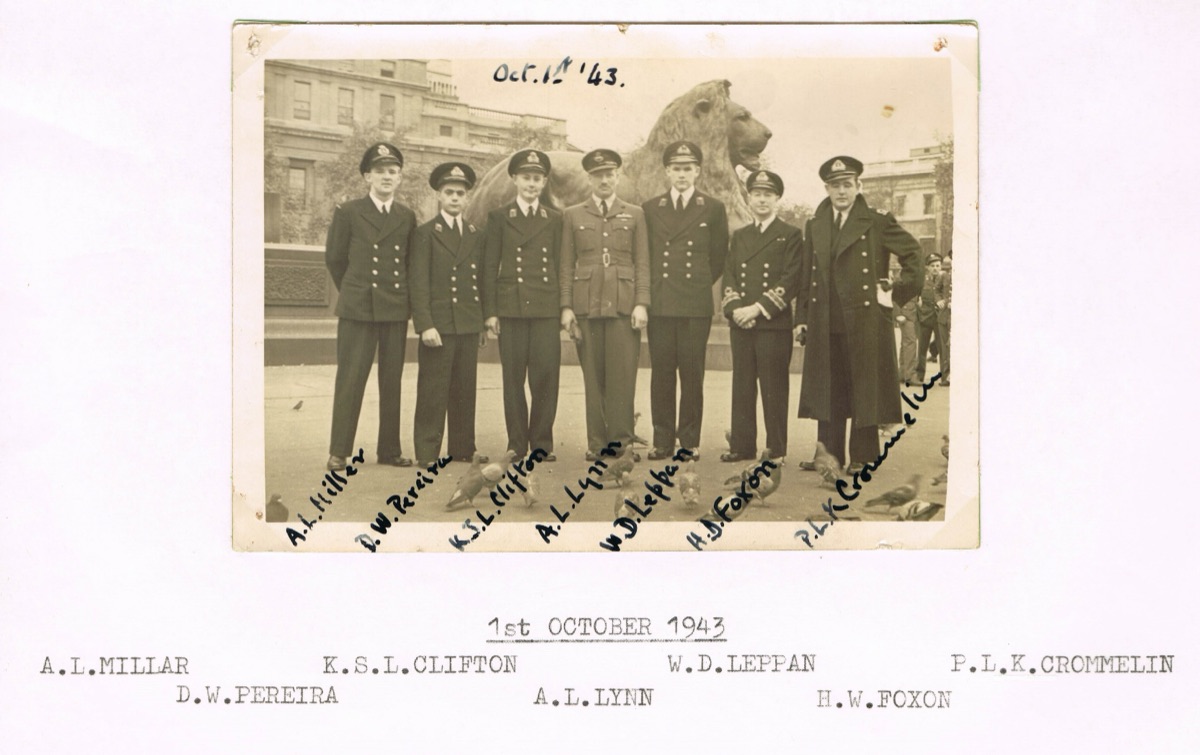
Lewis Alan Lynn, the only airman in this General Botha photograph, was born in Surrey and grew up in Witbank, a coal mining area northeast of Johannesburg. He attended a local school before joining the “General Botha” in 1932 as Cadet 635. Commissioned in 1938, Wing Commander Lynn was awarded the “Distinguished Flying Cross” in 1942 flying No 107 Squadron Blenheim’s but flying “Second Tactical Air Force”, No 180 Squadron Mitchell Bombers when this Trafalgar Square photograph was taken.
The Airmen who started at Sea
The Collier’s War Correspondent who joined the No 320 Squadron Mitchell Bomber crew at RAF Dunsford in Surrey on June 20th, 1944, for a V1 Rocket site raid was unaware his pilot, Wing Commander AL Lynn DSO and Bar DFC, a veteran of over 80 operational sorties had already flown a sortie that day or that he had earned two “Distinguished Service Orders” in five months.
The Airmen who started at Sea
Wing Commander Lynn and Group Captain Malan were the only South Africans among 80 RAF airmen awarded the “Distinguished Service Order” and “Bar”. Lynn’s “London Gazette” citations spoke volumes.
The Airmen who started at Sea
Ernest Hemingway the iconic American writer was 45 years old when this picture was taken with his aircraft captain Wing Commander Lynn DSO and Bar DFC in front of a No 320 Squadron Mitchell Bomber in June 1944. Noted for his adventurous spirit, he had just completed a bombing sortie with Lynn and his crew and earlier that month, crossed the Channel on D-Day with American troops. Events, covered in essays for Colliers Magazine. Hemingway was awarded the Nobel Prize for Literature in 1954.
The Airmen who started at Sea
Despite being gagged by censorship, Hemingway’s unique writing style captured Lynn’s “genius for leadership, … the wing commander came in, angry, happy. He was short, with a lot of style and a tough, bad tongue. He was twenty-six, I found out later. I had seen him get out of an airplane before I knew he was the wing commander. It did not show then, nor did it show now when he talked. The only way you knew he was the wing commander was the way the other pilots said “Sir”. They said “Sir” to the two squadron leaders…. But they gave a slightly different “Sir” to the wing commander, and the wing commander returned no change from it at all. Nor did he notice it when he pocketed it”.
The Airmen who started at Sea
The bombing experience Ernest Hemingway shared with the crew left the target “…completely surrounded by bomb craters….” and developed into a lasting friendship with Wing Commander Lynn.